Audio Accessories
Products · Audio Accessories
1 active deal
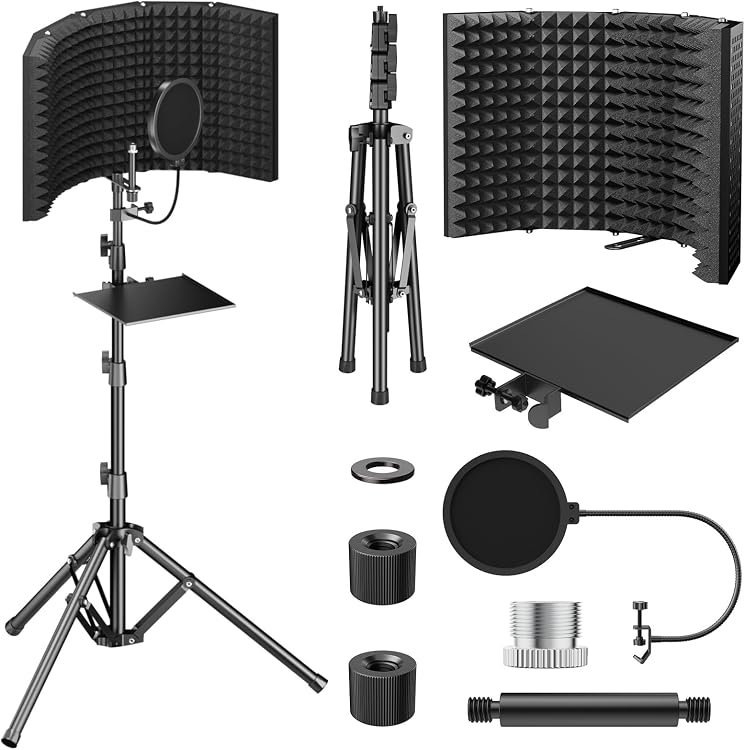
Choosing physical accessories for microphones and headphones
A boom arm, shock mount or headphone hanger solves a different problem: positioning, reducing transferred vibration or storing equipment. These accessories do not replace the microphone or headphones themselves. Identify the inconvenience you want to address, then check your equipment's dimensions before choosing a fitting.
Start with the job the accessory needs to do
A floor stand supports a microphone without resting on the desk; a desktop stand sits on the work surface. An articulated arm lets you bring it closer and move it out of the way. A shock mount reduces some mechanically transmitted vibration; it does not remove room noise. A pop filter softens bursts of air from speech, whereas a foam windscreen fits around the capsule area. Headphone stands and hangers organise storage without processing the audio signal.
- Decide whether you need frequent repositioning, a fixed recording position or simply storage.
- Do not mistake a pop filter for soundproofing or a cure for every kind of noise.
Check arm load, reach and desk attachment
Add the weight of the microphone, shock mount and any other fittings carried at the arm's end. Some arms require a minimum load to avoid rising on their own; others sag when extended too far. Compare usable reach with the distance to your working position. The clamp must fit the desktop thickness and sit on a sound area clear of aprons, drawers and bevelled edges.
- Check minimum and maximum load, joint travel and the clearance needed when folded.
- Do not clamp onto glass or hollow furniture unless the manufacturer permits that installation.
Match threads, mounts and protective fittings
The stand or arm thread must match the microphone, clip or shock mount; establish whether the necessary adapter is included. For a shock mount, check the specific microphone's diameter, weight and gripping arrangement. Foam that is too tight can deform, while a loose windscreen can slip off. A pop filter needs an attachment that places it in front of the microphone without hiding controls or restricting adjustment.
- A claim of universal compatibility is not a substitute for stated dimensions and thread specifications.
- Make sure cable guides leave slack around moving joints without trapping the cable.
Protect headphones and plan for maintenance
A hanger's contact surface should be broad and smooth to avoid concentrating pressure on the headband. Leave room for the earcups and do not stretch the cable. Replacement earpads must match the model, shape and fastening: their thickness and material can change fit and sound. Clean foam and other surfaces as directed, dry washable parts fully, and inspect elastic bands, screws and cushioning before deterioration affects support.
- Check the hanger's load rating and whether it uses adhesive, a clamp or mechanical fasteners.
- Consider available replacement elastics, foam and contact pads, not just the accessory's finish.