 1 / 7
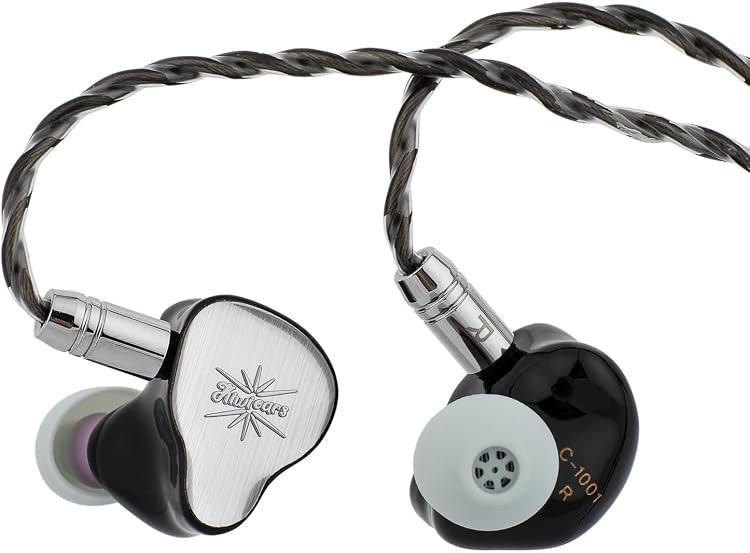
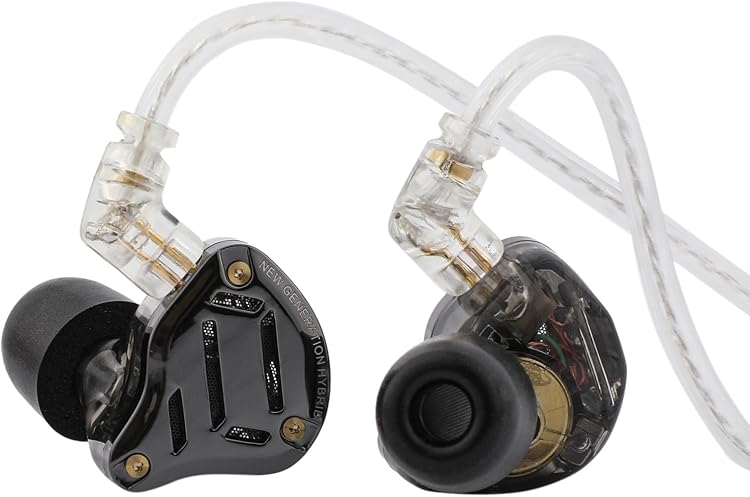
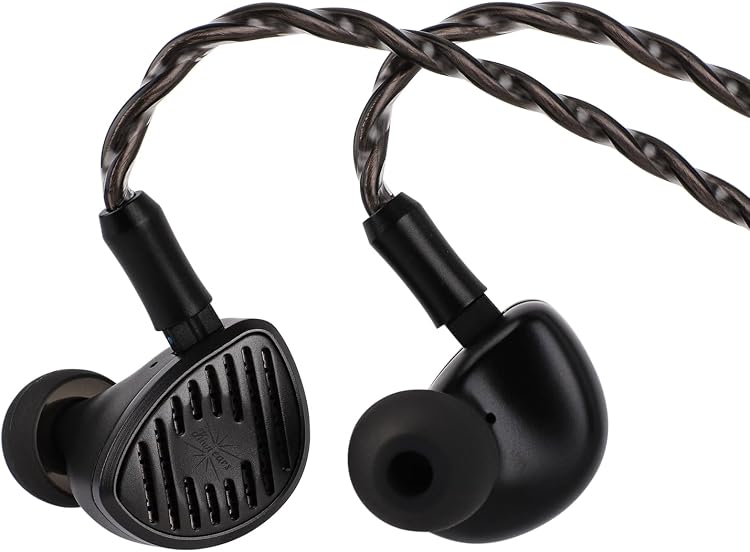
Linsoul Kiwi Ears Septet Quadbrid IEM, 1DD + 4BA + Planar + PZT
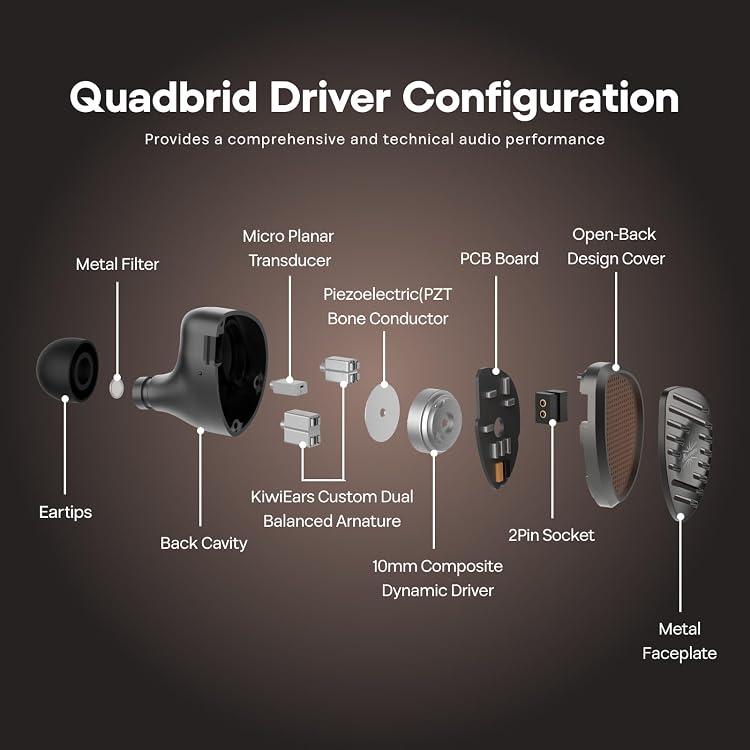
Planar: Linsoul Kiwi Ears Septet is an open-back, in-ear quadbrid earphone with seven drivers across four driver types. Its modular cable offers 3.5 mm unbalanced and 4.4 mm balanced plugs, while the open-back design is a trade-off to consider if you need isolation.
At a glance
- Seven drivers span one 10 mm dynamic, four balanced-armature, one micro-planar and one piezoelectric driver, according to the listing.
- A five-way passive crossover and three-bore nozzle system are described as part of the acoustic tuning.
- The included modular cable is described as switchable between 3.5 mm unbalanced and 4.4 mm balanced plugs.
- The manufacturer describes the sound tuning as combining an impactful sub-bass shelf with natural mids and smooth extended treble.
Reference price: £250.99
Price checked: 16 Nov 2026
View offerAhead of Black FridayExplore the selectionPros and cons
Pros
- Two plug options are specified for the modular cable, giving compatible sources a choice of unbalanced or balanced connection.
- The open-back design and multi-driver layout are aimed at listeners prioritising the maker's stated soundstage and detailed playback goals.
Cons
- The open-back design is a compromise for listening environments where stronger isolation from surrounding sound is important.
Technical specifications
11 specifications| Brand | Linsoul |
|---|---|
| Model | Kiwi Ears Septet |
| Form factor | In Ear |
|---|---|
| Ear placement | Open Ear |
| Colour | Black |
| Noise control | Passive Noise Cancellation |
| Driver configuration | 1DD + 4BA + 1 Planar + 1 PZT |
|---|---|
| Impedance | 15 Ohms |
| Frequency response | 30 KHz |
| Sensitivity | 95 dB |
| Headphone jack options | 3.5 mm Jack, 4.4 mm Jack |
|---|
What to know before buying
Listing details to confirm
The listing calls the ear placement “Open Ear” while also describing an open-back in-ear monitor. Treat the latter as the design description and confirm the fit and isolation characteristics suit your needs. Its 30 KHz frequency-response entry gives no lower endpoint, while the feature text separately claims bass down to 8Hz. The listing's 95 dB sensitivity does not state a measurement condition. These details are inconsistent or incomplete, not proof of a product defect. The 3.5 mm and 4.4 mm connections are cable plug options, not evidence that a source supports both.
Who is it for?
A good fit for
- Listeners seeking a wired in-ear monitor with multiple driver types and modular 3.5 mm or 4.4 mm plug options.
- Buyers who prefer the maker's open-back acoustic approach and do not need strong sound isolation.
Less suited to
- People who need a clearly stated level of isolation from ambient noise.
- Buyers who need an unambiguous, fully specified frequency-response range before choosing.

Customer reviews on Amazon
- 5 stars
55% 55% - 4 stars
17% 17% - 3 stars
9% 9% - 2 stars
8% 8% - 1 star
11% 11%
Aggregate ratings are mixed, with five-star ratings forming the largest share but a meaningful spread across lower star categories. That pattern offers limited guidance on specific sound or fit preferences. Consider whether the open-back design and modular cable match your intended use, and do not treat the rating distribution as evidence of a particular strength or defect.
Frequently asked questions
What driver configuration does the Septet use?
The listing specifies one dynamic driver, four balanced-armature drivers, one planar driver and one PZT driver, for seven drivers across four types.
What cable plugs are offered?
The listing describes a modular cable that can be changed between 3.5 mm unbalanced and 4.4 mm balanced plugs. Check that your audio source has the matching connection.
Is the Septet open-back?
The feature description calls it an open-back IEM, while the product details label ear placement “Open Ear”. The wording is inconsistent, so confirm the fit and expected isolation before buying.